%201.svg)


When Should You Replace Your HVAC System Instead of Repairing It?
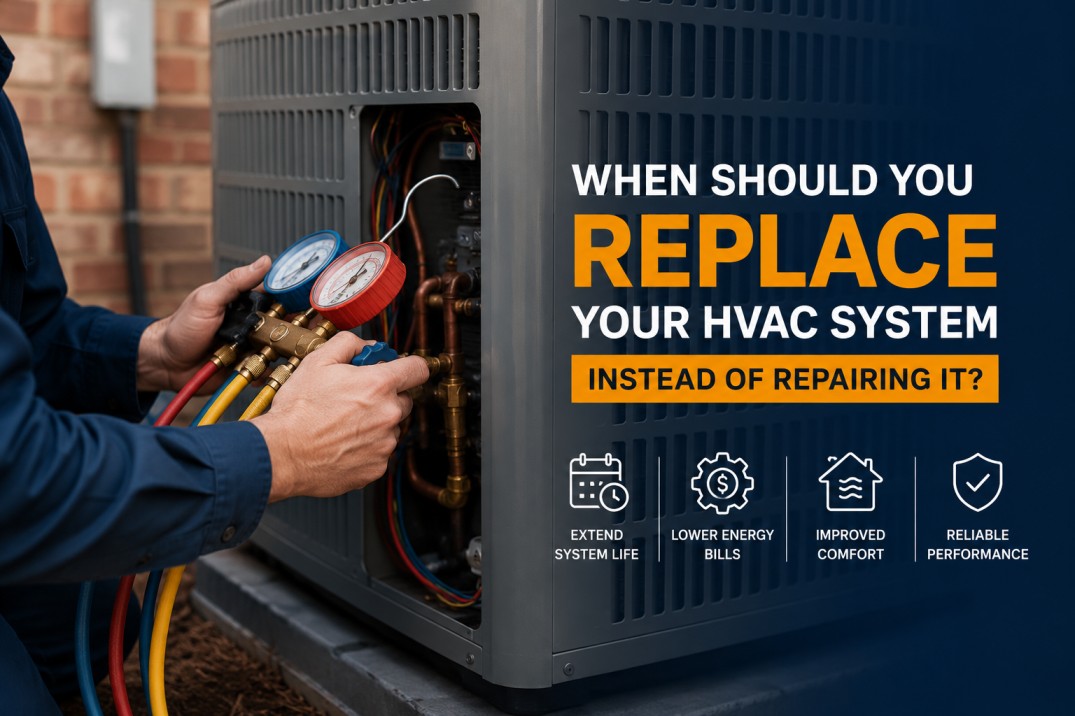
Your HVAC unit is among the most critical elements of your home, responsible for maintaining your indoor surroundings comfortable in every season. Regardless of whether it is the deep summer or the coldest winter, in late hours, you count on it to perform frequently. Yet, like all mechanical systems, it has a restricted lifetime. At some point, house owners have to choose whether to keep on contributing in HVAC repair or replace the system completely. This choice can notably affect your comfort, energy charges as well as long term charges.
Understanding the Lifespan of Your HVAC System
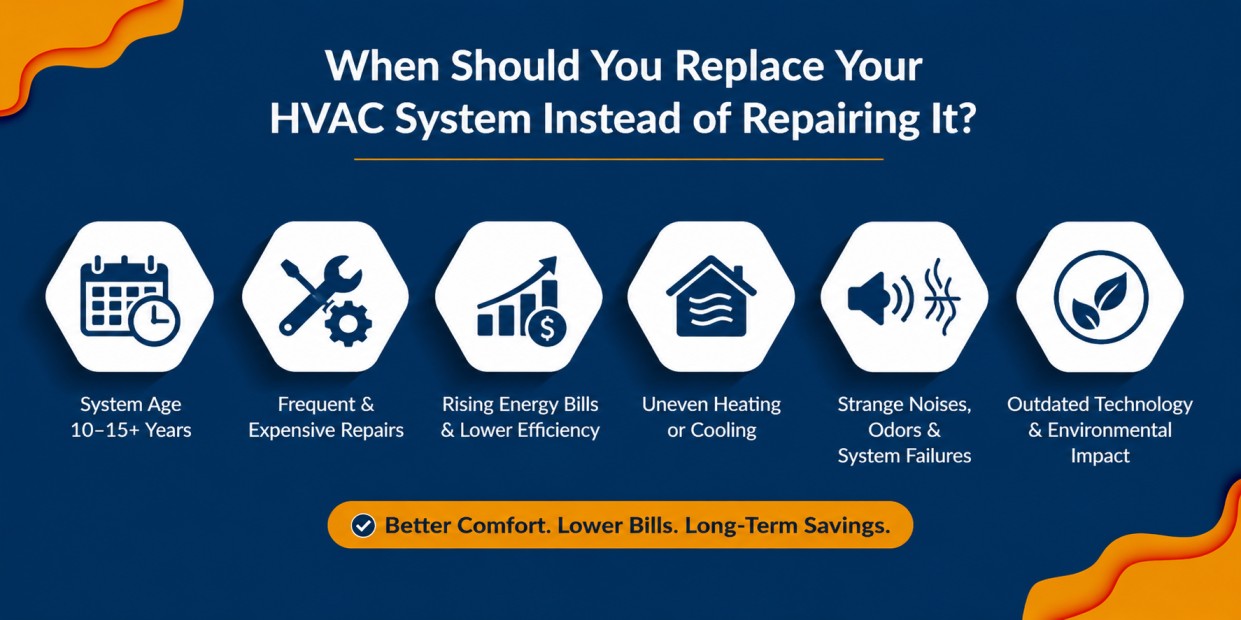
Many HVAC systems are made to last around ten to fifteen years with correct upkeep. Some units may prolong more than this range, but performance as well as effectiveness generally start to decline after the ten year mark. As systems age, elements like compressors, motors as well as coils begin to deteriorate, resulting in more consistent HVAC fix requirements. Even if the system is still operational, it may not be performing as effectively as it once did. Outdated systems also tend to lack contemporary energy-saving characteristics. In case your HVAC system is advancing toward or has crossed the ten to fifteen-year mark, it is smart to start checking whether ongoing repairs are still functional or if replacement would be a better fix.
Frequent and Expensive HVAC Repairs
Among the strongest indicators that change may be needed is the consistency of breakdowns. In case you are contacting technicians for HVAC repair every few months, the system is probably nearing the end of its useful life. While people repairs might look reasonable, they rapidly gather into a notable expense as time goes on. Consistent repairs also indicate that one malfunctioning element is always followed by another. Rather than consistently solving one issue after another, contributing to a new system can reject repeating breakdowns as well and give you mental peace.
Rising Energy Bills and Reduced Efficiency
Another clear indication that change may be better than repair is a visible development in energy charges. As HVAC systems age, they lose effectiveness as well as demand more energy to upkeep the same temperature. Even if your system shows up to be functioning generally, it may be taking in notably more electricity than need. While HVAC repair can regain partial practicality, it cannot incorporate energy-smart technologies, like variable-speed motors and intelligent thermostats, which can notably decrease monthly electricity charges.
Uneven Heating or Cooling in Your Home
In case certain spaces in your home feel too warm while others remain too chill, your system may not be distributing air effectively and correctly. This issue can sometimes be solved with targeted HVAC repair, like duct cleaning, thermostat calibration or air circulation changes. Yet, in case uneven temperatures persist even after restorations, it may indicate a deeper issue with the system’s capacity or design.
Strange Noises, Odors, and System Failures
Strange sounds like grinding, banging or rattling are always red flags that internal elements are deteriorating. In the same way, strange smells may indicate mildew development, burnt wiring or overheating elements. While some of these problems can be completely solved through HVAC repair, recurring signs often recommend deeper mechanical issues. In case your system consistently struggles to begin, shuts down suddenly or demands repeated technician visits, it may not be trusted anymore. Continuing to regain an unstable system can become stressful and pricey as time goes on.
Outdated Technology and Environmental Impact
Outdated HVAC systems always count on old refrigerants and lack contemporary energy-smart features. These systems may also fail to align with current ecological rules, making them less environmentally friendly. Modern HVAC systems are made to decrease energy usage, lower climate-warming gases, and improve indoor air quality. They always involve characteristics like an updated filtration system, humidity regulation and smart home integration.
When Replacement Becomes the Smarter Financial Decision
● Even though HVAC replacement demands a greater initial investment, it can be more budget-friendly than upkeeping an old one.
● Consistent HVAC repair charges can develop, making an aging system more pricey to care.
● A new unit offers good energy effectiveness, supporting a decrease in increasing energy charges.
● Contemporary HVAC units deliver trusted operation with minimal sudden malfunctions.
● New tool usually demand minimal repairs and less maintenance compared to old systems.
FAQs
What is the most common HVAC problem?
Dusty purifiers and limited airflow are usual HVAC issues, decreasing airflow, comfort and functionality.
What is the most common part to fail on HVAC?
Power capacitors, as well as thermostats are usual HVAC elements that fail because of deterioration and consumption.
Is it cheaper to repair or replace HVAC?
Repairing is affordable for slight issues, but replacement may save amount when systems are outdated or consistently shut down.
Is Carrier or Trane better?
Carrier and trane both deliver quality units, the finest choice counts on effectiveness, and arrangement demands.
Contacting a skilled HVAC specialist can always deliver a comprehensive checkup of your system’s condition as well and support you opt for the affordable fix. To sum up, spending money on a fresh system can often help you lower energy bills as well and offer dependability for your home.

Ready to Enhance Your Comfort?
Contact our experts today to discover tailored HVAC solutions that fit your needs perfectly.

