%201.svg)


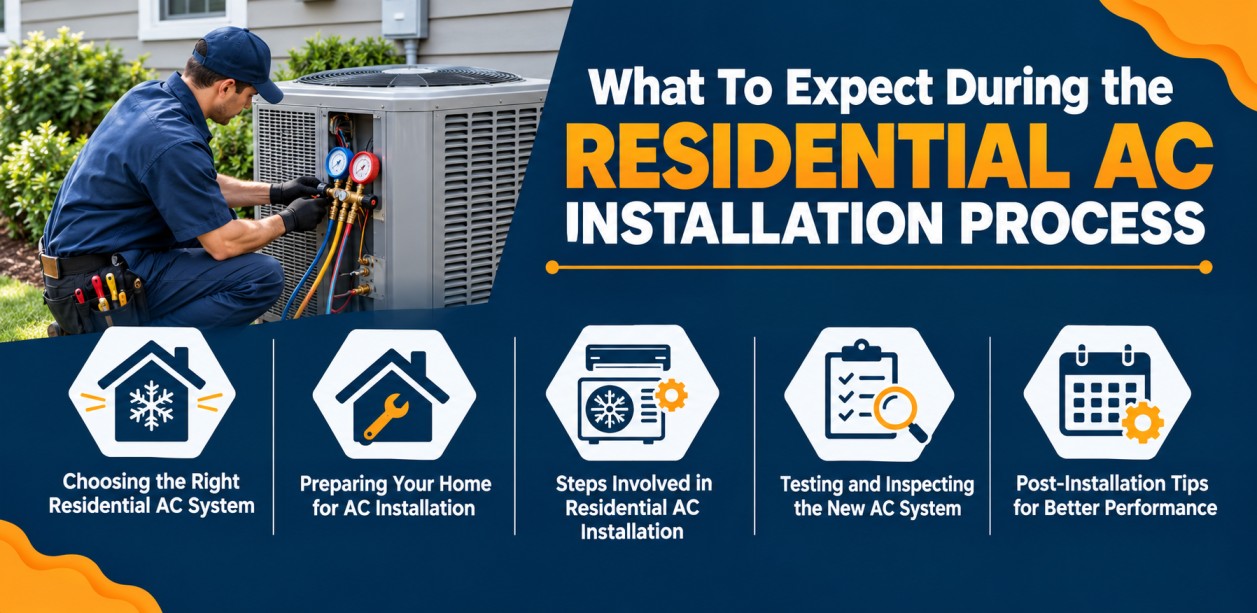
What To Expect During the Residential AC Installation Process
Introduction:
A properly installed residential air conditioner system will keep you comfortable, save energy, and maintain good indoor air quality in your home. Regardless of whether you are updating an old system or installing an air conditioner system for the first time, knowing what to expect during the installation process will ensure you are prepared throughout the process. Understanding the basics of how a residential air conditioner works will also give you peace of mind.
1. Choosing the Right Residential AC System
The first step in the installation process of air conditioning systems is to choose an air conditioning system that meets your cooling needs. Although professional HVAC technicians take many factors into consideration, including the size and insulation of the house, existing ductwork, number of rooms, local climate, and the family's comfort requirements, it is essential to pick the right air conditioning system. If an air conditioning system is installed that is either too big or too small, it will not work properly as it should, which will not help in cooling your home properly and will entail unnecessary energy costs.
One of the key reasons why it is vital to choose the right air conditioning system is that it will aid in comparing the types of air conditioning systems together with their efficiency and other features. Therefore, it is advisable to consult contractors who will provide information about the air conditioning systems as well as about smart controls and programmable thermostats.
2. Preparing Your Home for AC Installation
Before installing the new equipment, the technician must prepare your installation sites. It may include the removal of your current AC system, evaluation of electrical connections, checking the condition of refrigeration lines, and assessing your ductwork requirements. Proper planning will help ensure efficient installation and prevent future complications once your system starts operating.
Your installation locations must be easy to reach and should not contain any obstacles. Your floors, walls, or adjacent furniture pieces could potentially get damaged during installation. Any repairs or upgrades needed for your existing ducts, wires, drainage lines, or mounting surfaces might need to be addressed before proceeding with installation.
Properly preparing your installation sites can save you valuable time and headaches.
Properly preparing your installation sites can save you valuable time and headaches.
3. Steps Involved in Residential AC Installation
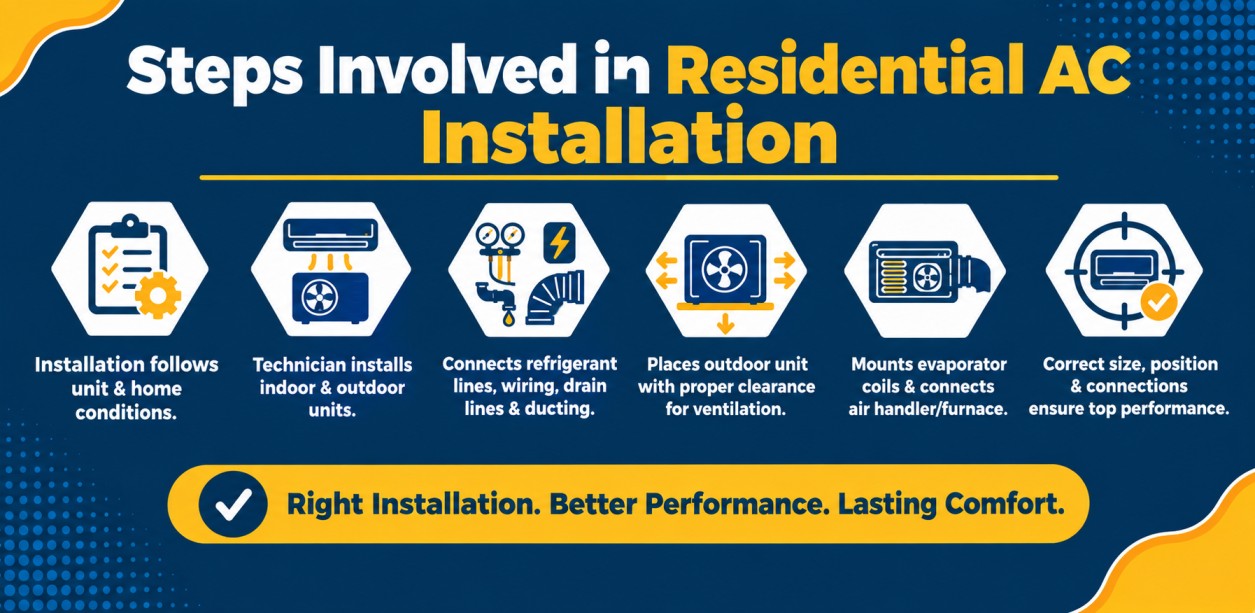
- Installation procedures depend on the specific AC unit and pre-existing conditions within the house.
- A technician will install both the indoor and outdoor units.
- Refrigerant lines, electrical wiring, drain lines, and ducting must be hooked up appropriately.
- An appropriate location outside the house is selected for installing the outdoor condensing unit, which needs to have sufficient clearance space around it for ventilation purposes.
- In the house, the evaporator coils are mounted along with connecting the air handler/furnace.
- Installation is crucial since even a highly efficient AC unit can underperform if the connections, sizing, and positioning are inaccurate.
4. Testing and Inspecting the New AC System
After the equipment installation, a technician will test the system before calling it a day. Some things he/she may check include the level of refrigerants, air flow rate, wiring connections, operation of thermostats, temperature differentials, draining capabilities, and overall performance of the AC unit.
In addition, technicians usually listen to any abnormal sounds coming from the unit. The testing phase ensures that the system starts, operates, and stops in the right manner. Additionally, the technician sets up the thermostat per your specifications for maximum comfort.
Final testing provides assurance that everything works well and enables you to spot installation flaws early enough.
5. Post-Installation Tips for Better Performance
Proper care for your new air conditioning system can help you keep its good performance. Make sure to periodically change or clean filters as per the manufacturer’s requirements, keep outdoor condensing units clean and free from trees and waste, and avoid obstructing the supply and return vents indoors.
You should also schedule maintenance checks for essential parts of your air conditioning system, like electrical components, refrigerant level, drainage, and others. Pay attention to indicators such as abnormal sounds, nonexistent airflow, strange smells, and irregular cooling operation.
Frequently Asked Questions:
How do I choose the right AC system for my home?
The HVAC professional evaluates various factors, including your house size, insulation, ducting, local climate, and cooling needs, to decide on the optimal air conditioning system size and efficiency rating.
When should I replace my existing AC system?
It is probably time for a replacement if you notice frequent breakdowns, increasing repair costs, erratic cooling performance, or the impending end of your unit's average service life.
Does professional AC installation improve efficiency?
Absolutely. Correct sizing, proper installation, wiring, airflow optimization, proper refrigerant charging, and correct system setup enable an air conditioner to run closer to its design efficiency levels.
How often should a newly installed AC system be maintained?
Annual maintenance visits are usually advised. Booking appointments ahead of the cooling season enables early detection of possible malfunctions and efficient operation throughout summer months.
Why should I hire a professional for AC installation?
Correctly sized, installed, wired, set up, and configured systems benefit from professional installations. Warranties are another advantage.

Ready to Enhance Your Comfort?
Contact our experts today to discover tailored HVAC solutions that fit your needs perfectly.

