%201.svg)


What to Do When Your AC Stops Working During a Heatwave?
Having an air conditioning unit break down in a heat wave is one of the worst possible things to happen. When the outdoor air becomes excessively hot, your air conditioning unit goes from being a luxury item to an absolute necessity to sustain a safe and healthy indoor environment. A breakdown of an air conditioning unit can render your home uninhabitable. It is especially true for young children, elderly individuals, or pets. If your air conditioning system has broken down, knowing the appropriate response steps can alleviate some stress and help prevent further damage to the air conditioning system. There are a variety of different things you, as a homeowner, can do to determine the cause of the breakdown.
Stay Calm and Check the Thermostat
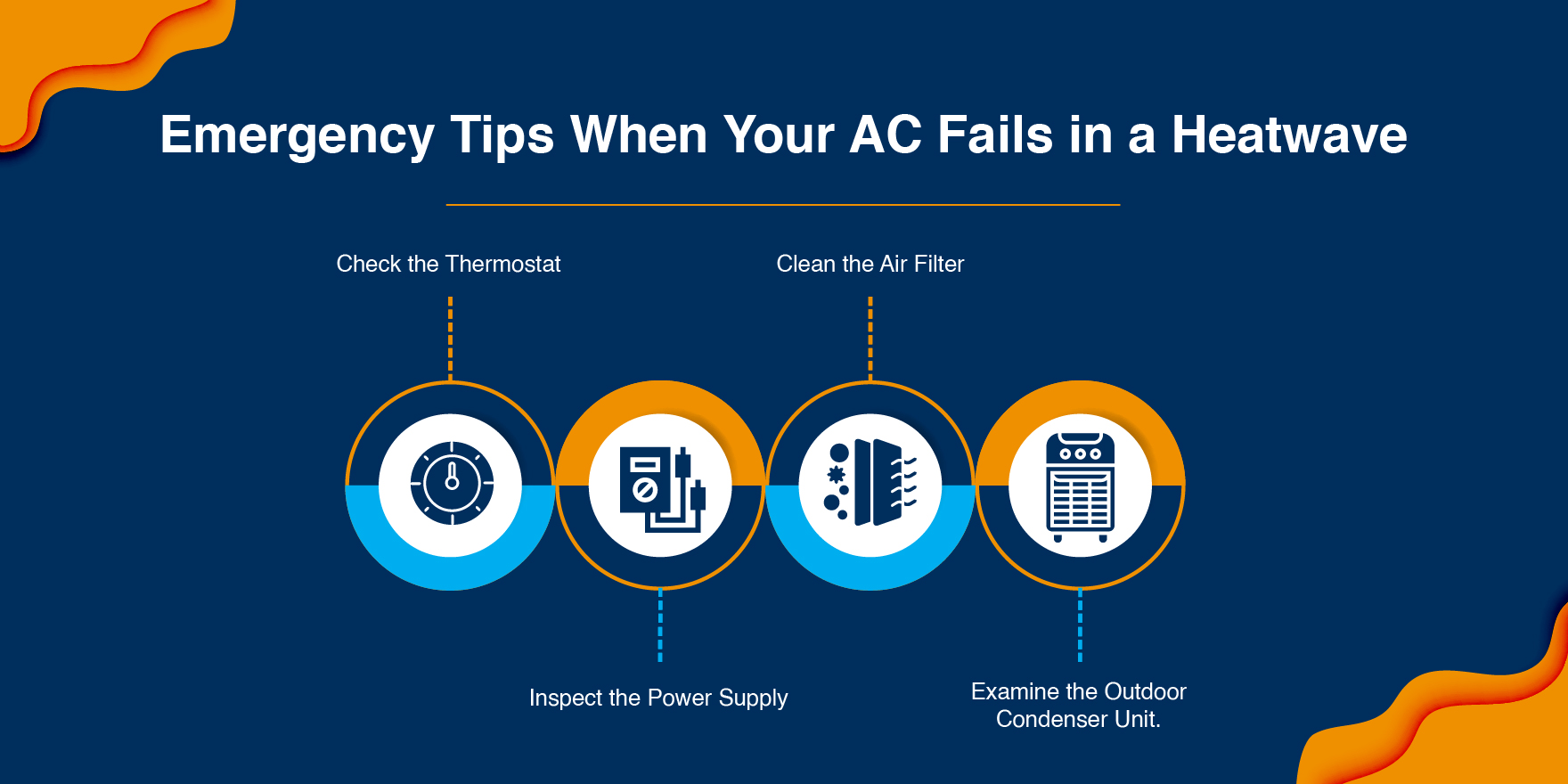
One of the most common causes of air conditioning systems not operating is that the thermostat settings are incorrect, or the batteries in the thermostat have died. The thermostat should be set to "cool" and the temperature set lower than the current room temperature. Sometimes, an air conditioning system gets accidentally reset due to a power surge, or the user unintentionally changes the thermostat settings. If the thermostat uses batteries, replacing the batteries at the thermostat should restore the operation of your air conditioning system. You should also check the smart thermostat for any Wi-Fi or software connectivity issues that may impact the cooling of your home.
Inspect the Circuit Breaker and Power Supply
Air-conditioning systems need a lot of electricity to operate, particularly when outside temperatures rise. When systems must work harder than normal to keep homes at desired cooler temperatures than outside, AC systems can cause power surges to overload the electric circuit that supplies energy to the unit and shut down the system. If this happens, check the electric circuit panel for your AC system, as the circuit may have tripped. If so, carefully reset it and see if the AC turns back on. In addition, check the outside unit to see if any power disconnect switches have come loose. If the electric circuit trips again immediately, you should not reset the circuit again, as doing so may indicate more serious electrical problems that require assistance from a professional electrician.
Replace or Clean the Air Filter
A common reason why an AC unit will not work during a heat wave is a dirty air conditioning filter. Air conditioning filters capture dust and dirt from the air, and when they become dirty, they will block air from flowing through them properly. It will make the AC unit work harder, which could cause the unit to fail altogether (at least temporarily) until the filter is either replaced or cleaned (as instructed by its respective manufacturer). Additionally, replacing or cleaning the Air Conditioning filter will improve airflow in your home, conserve energy, and allow the AC unit to cool your home more effectively. Filters should be checked and/or replaced every month in the summer to lessen any potential strain to the AC unit.
Examine the Outdoor Condenser Unit
Your outdoor evaporator unit has an important function of expelling unwanted heat from your home. If you have a heat wave, you may find that the airflow around the evaporator unit is blocked by objects like leaves, debris, or grass clippings, which could be reducing the performance of your air conditioner. Inspect the evaporator unit visually for any potential blockages, and clear any accumulated debris in the surrounding area. Ideally, there should be at least 2 feet of unobstructed space around the evaporator unit, ensuring that the unit has proper access to free-flowing air. The evaporator coils on your unit can also be rinsed off with a garden hose, as long as you use low-pressure water – avoid spraying water directly from a high-pressure hose, as that might damage delicate parts of the evaporator.
Final Thoughts
Air conditioning systems can fail during a heatwave, which can be an uncomfortable and stressful experience. Taking steps to troubleshoot your unit will help restore comfort sooner and sidestep any further complications. You could take simple steps such as checking the thermostat, checking the breaker, replacing filters, and cleaning the outside unit to potentially fix minor issues without needing to bring in a professional service technician. However, knowing when to call an HVAC specialist is essential to avoid costly damage and ensure safe operation. Performing routine maintenance and being proactive in caring for your system will aid homeowners in reducing the chances of an unplanned AC failure and keeping them ready for the most extreme summer temperatures.

Ready to Enhance Your Comfort?
Contact our experts today to discover tailored HVAC solutions that fit your needs perfectly.

