%201.svg)


Seasonal HVAC System Inspection Tips for Homeowners
Introduction
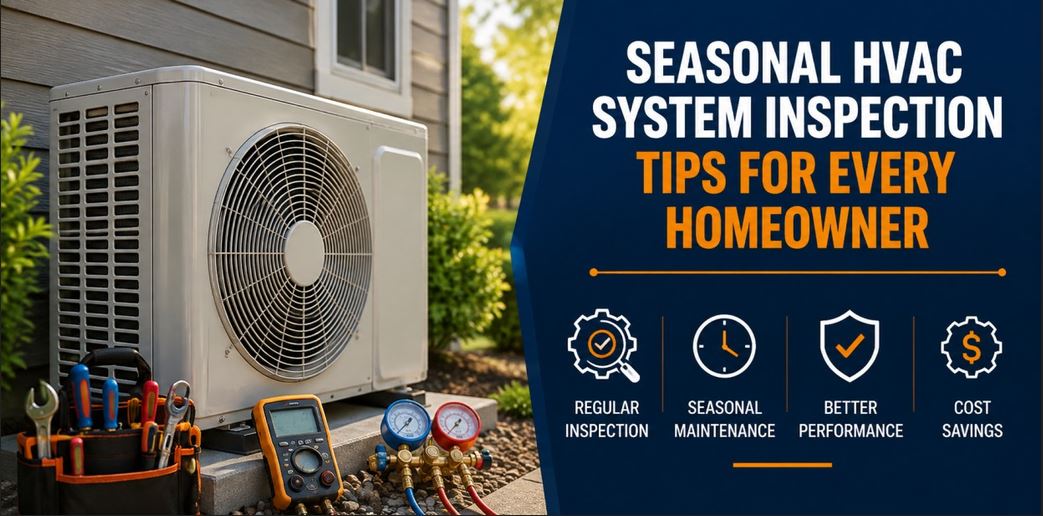
Inspection of HVAC systems on a seasonal basis can assist homeowners in ensuring that their heating and cooling equipment is always in good condition. Inspection is crucial for discovering worn parts, airflow blockage, noises, and other potential problems that may arise from the use of heating and cooling equipment. Seasonal inspection and maintenance of HVAC systems can improve your comfort level and also enhance the efficiency of such equipment.
1. Why Regular HVAC System Inspection Matters
The working of your HVAC system varies according to changes in outdoor temperatures. Therefore, HVAC system inspection should be done on a regular basis since it enables you to discover smaller problems that may eventually lead to larger breakdowns in the future. Dirt in filters, loose electrical connections, clogged drain lines, and restricted airflow can make your system less efficient and costly.
Inspection can also help increase the lifespan of the system. When your system undergoes regular cleaning, adjustment, and inspection, it will not have to work under strain. You will have constant and comfortable temperatures in your home all year round.
2. Best Time for Seasonal HVAC System Inspection
• Air Conditioning Systems: Schedule your inspection in the early spring before summer
• Heating Systems: Schedule your inspection in the early fall before winter
• All-seasons HVAC Systems: Best if inspected twice a year (once in spring, once in fall)
• Before the beginning of seasons: Ensures availability of technicians
• Early scheduling: Ensures that problems can be fixed before extreme weather conditions
3. Key Components to Check During Inspection
An HVAC system inspection for the season must involve several crucial elements. First is the air filter, which must be replaced or cleaned as per the manufacturer’s guidelines. An air filter that is clogged will limit the movement of air through the system, and hence the system will run inefficiently.
Other parts that need an assessment include thermostats, electric connections, ducting, refrigerant amount, condensate drains, blower components, coils, and outdoor systems. In case of heating systems, some additional parts to be inspected by a professional include burners, heat exchangers, ignition components, and safety controls.
While homeowners may carry out inspections on their own, electrical, refrigerant, and other technical parts must be inspected by a professional.
4. Common HVAC Problems Homeowners Should Watch
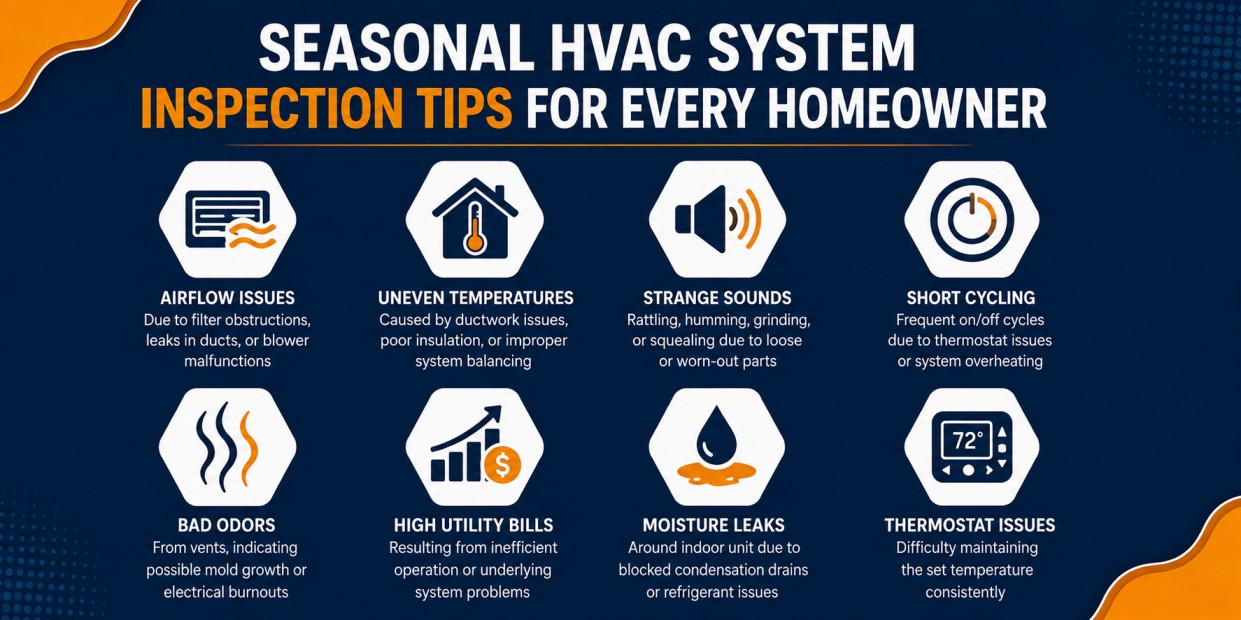
1. Problems in airflow from vents due to filter obstructions, leaks in the ducts, or malfunctions of blower parts
2. Uneven temperatures inside the rooms that may be a result of problems in the ductwork, bad insulation, or improper system balancing
3. Strange sounds like rattling, humming, grinding, or squealing that point to improperly installed or worn-out parts
4. Too frequent switching on and off of the HVAC system due to a problem with the thermostat or overheating of the system
5. Bad smell that comes from the vents, meaning possible development of mold or electrical burnouts
6. High utility bills that appear due to inefficient operation of the system or other problems
7. Moisture leakage around the indoor unit due to blocked drainage of condensation or problems with refrigeration
8. Difficulty in maintaining the temperature set by the thermostat
5. Benefits of Professional HVAC System Inspection
An examination by a professional HVAC expert offers a more comprehensive assessment compared to a routine homeowner’s inspection. Professional technicians are able to test system performance, diagnose potential problems, test electrical connections, assess airflow, and ensure that the system is running according to specifications set out by the manufacturer.
Routine service from a professional can increase system reliability, efficiency, and comfort levels. It could also help detect safety issues that homeowners might not notice. More importantly, maintenance enables homeowners to plan their repair work without having an HVAC failure while it’s extremely hot or cold.
FAQs:
How to Inspect HVAC Systems?
Review the thermostat, the air filter, the vents, the ductwork, and other visible parts. For technical parts, engage an HVAC expert.
What Does an HVAC System Inspection Include?
The process normally involves inspecting the filters, airflow, electrical connections, coils, ductwork, refrigerant, drainage, and performance of the whole system.
Why Is Seasonal HVAC System Inspection Important?
It enables identification of potential problems and enhances efficiency.
Can Homeowners Perform an HVAC System Inspection?
Yes, homeowners can perform basic checks and replace filters. Well-versed service inspections are recommended for technical components.
Can HVAC Inspections Help Reduce Energy Costs?
Yes, by identifying the flow and performance problems, you may be able to increase the efficiency of your HVAC.

Ready to Enhance Your Comfort?
Contact our experts today to discover tailored HVAC solutions that fit your needs perfectly.

