%201.svg)


New HVAC Installation: Essential Tips for a Successful Upgrade
Setting up a new HVAC system is a big home improvement choice that can develop indoor comfort, energy efficiency, and air quality. Regardless of whether your current heating and cooling system is old, consistently breaking down or not meeting your home’s requirements, updating to a new HVAC system can be a worthwhile investment. Yet, effective installation demands mindful planning and professional help. From choosing the right equipment to planning your home and maintaining the system afterward, every step is super important.
How to Plan a New HVAC Installation
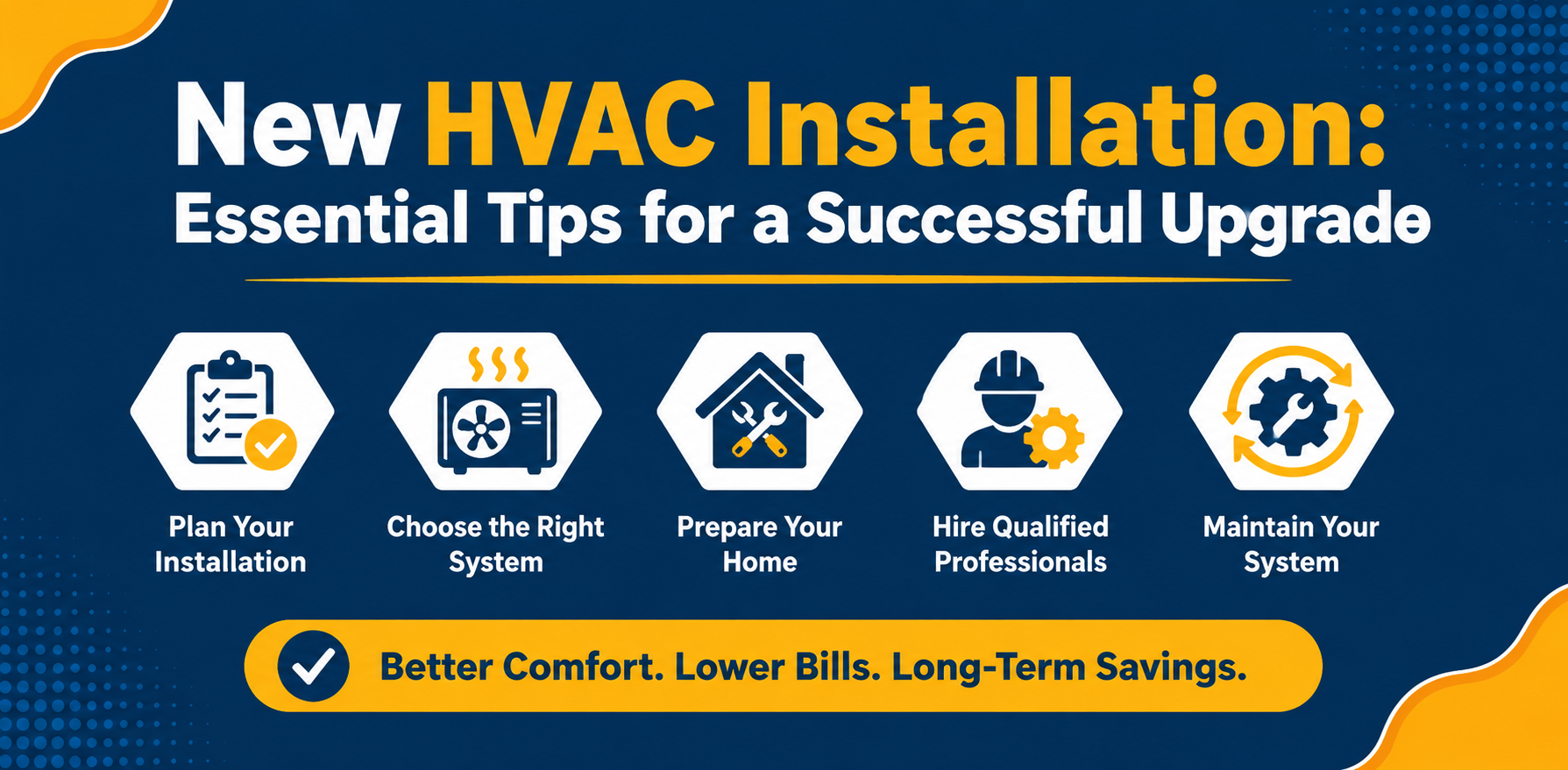
The first move in an effective new HVAC installation is making a clear plan. Begin by checking your current system and finding the issues you need the new system to solve. Think of factors like imbalanced temperatures, high energy charges, consistent repairs, improper air circulation, or insufficient heating and cooling. Your home’s size, insulation, number of rooms, windows and local weather conditions should also be considered when finding the relevant system capacity. An HVAC professional can perform a load calculation to make sure that the system is neither too big nor too tiny for your home. It is also very important to establish a practical financial plan. Consider not just the tool and installation charges but also potential electrical, thermostat and upkeep charges.
Choose the Right HVAC System for Your Home
Opting for the right HVAC system is among the most critical elements of the installation process. There are various choices available, involving central air conditioners, heat pump systems, air duct mini-split systems, and package HVAC systems. Energy efficiency should be a key consideration. A high-efficiency system may have a greater initial cost but can potentially decrease monthly energy usage over its lifetime. Look for equipment with relevant efficiency ratings and features that match your home’s demands. You should also consider the system’s size and compatibility with your current air duct and electrical setup. A professional HVAC contractor can compare different choices and suggest equipment depending on your home’s layout, comfort demands and financial plan.
Prepare Your Home Before HVAC Installation
Correct preparation can help make installation speedier and more effective. Before technicians arrive, clear the areas around the current HVAC equipment and provide access to indoor and outdoor installation locations. If ductwork needs to be repaired or replaced, discuss this with your contractor before installation starts. Damaged or improperly sealed ducts can decrease system effectiveness and affect air circulation, even when you have a new HVAC system. You may also need to plan for short term interruptions to heating and cooling during the installation. Secure furniture and belongings near the workplace, and discuss any special demands with the installation team in prior.
Hire Qualified Professionals for New HVAC Installation
Professional installation is super important for getting the finest performance from your new HVAC system. Even a top-quality unit can perform improperly if it is incorrectly sized, or installed. When selecting an HVAC contractor, look for relevant licensing, coverage, experience, and positive client reviews. Ask whether the contractor offers written estimates and guarantees for both tool and installation. A skilled professional should check your home’s current setup, suggest a suitable tool, arrange the system based on manufacturer requirements, and test its operation before finishing the task.
Maintain Your New HVAC System After Installation
Once your new HVAC system is installed, routine maintenance can support secure your contribution. Replace or clean air filters based on the manufacturer’s suggestions. A dirty filter can limit air circulation and make the system work harder. Keep outdoor units clear of plant foliage, dust and other debris and ensure indoor vents and registers are not blocked by furniture or home items. Professional HVAC upkeep is also suggested at routine intervals. A technician can checkup electrical elements, refrigerant levels, air circulation, air ducts, and other important components. Regular upkeep can help find small issues before they become pricey repairs.
Frequently Asked Questions
What does a new HVAC installation include?
A new HVAC arrangement usually includes disposing of the old equipment, installing the new heating and cooling unit, connecting electrical and air duct elements and checking the system.
How long does a new HVAC installation take?
A conventional HVAC replacement may take anywhere from multiple hours to a full day. More challenging installations, including new ductwork, electrical updates, or system changes, can take longer.
How much to install a new HVAC system?
The cost of a new HVAC system varies based on the equipment type, system size, arrangement complexity, air duct demands, efficiency rating and local labor charges.
Can a new HVAC system reduce energy costs?
Yes, a new high-efficiency HVAC system can potentially decrease energy usage compared with an outdated, ineffective system.
When should I replace my HVAC system?
Replacement may be worth thinking about when your HVAC system is old, requires consistent repairs, offers inconsistent comfort, produces strange sounds or results in high energy charges.

Ready to Enhance Your Comfort?
Contact our experts today to discover tailored HVAC solutions that fit your needs perfectly.

