%201.svg)


Clear Skies Indoors: Improving Air Quality in Your Fort Worth Home
December 10, 2025

Why Fort Worth Homeowners Need to Know About Indoor Air Quality
Indoor air quality Fort Worth matters more than most homeowners realize. Your home's air is likely 2 to 5 times more polluted than the air outside—and since you spend about 90% of your time indoors, that's a big deal for your family's health.
Fort Worth faces unique air quality challenges. The Dallas-Fort Worth area consistently fails EPA ozone standards, earning an "F" grade from the American Lung Association. Add in aggressive pollen seasons, high humidity that encourages mold, and vehicle emissions seeping indoors, and your HVAC system has its work cut out for it. Outdoor pollutants don't stay outside; they enter through leaky ductwork and open windows, mixing with indoor contaminants like dust, pet dander, and VOCs.
This guide walks you through these specific issues and shows you practical steps to clean up the air your family breathes every day.
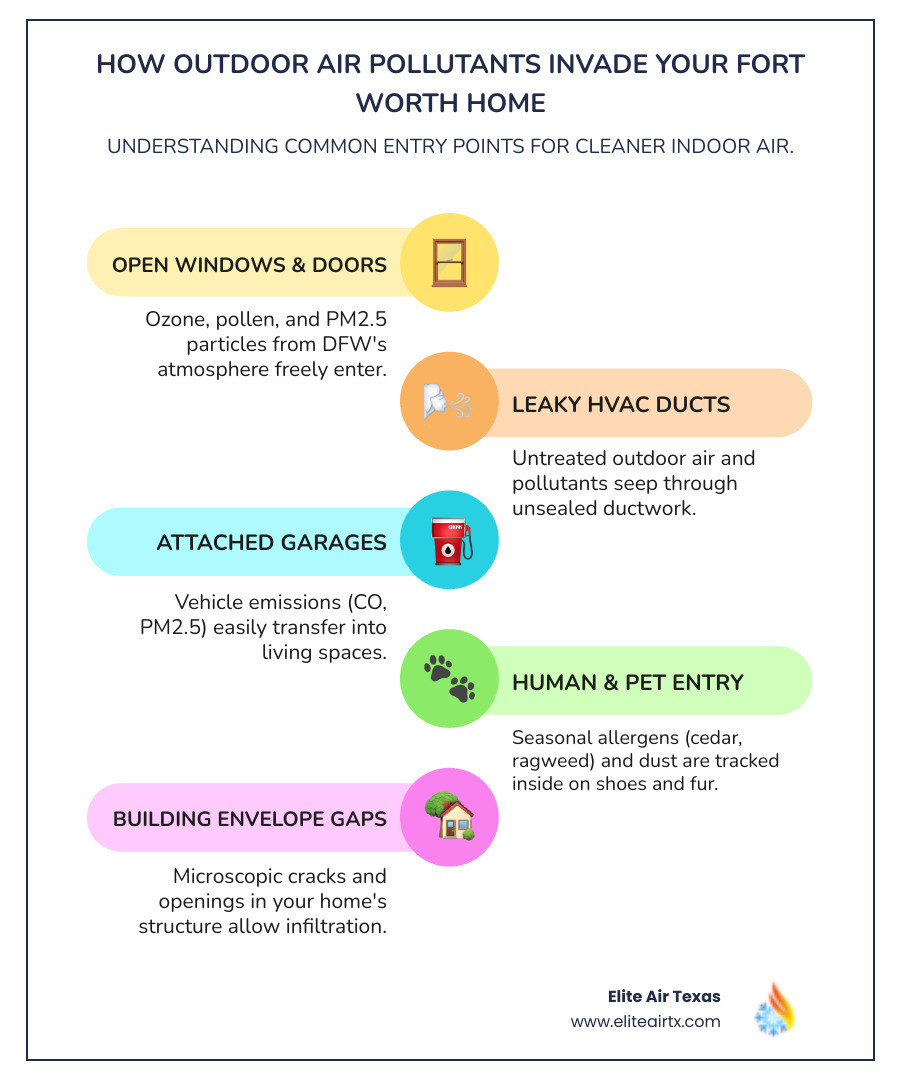
The Fort Worth Factor: How Outdoor Air Invades Your Home
Your home might feel like a safe haven, but Fort Worth's outdoor air has a way of slipping inside. The Dallas-Fort Worth area is a "Non-Attainment" zone for ozone pollution, meaning we consistently fail federal air quality standards. The American Lung Association gave our region an "F" grade for ozone, ranking us among the worst cities in the nation.

While our air has met targets for PM2.5 particles—tiny pollutants that can lodge in your lungs—levels are still higher than what the World Health Organization recommends. Where does this pollution come from? About 52% of regional PM2.5 and ozone pollution comes from vehicle exhaust. The petroleum industry and over 1,000 natural gas wells tied to the Barnett Shale also contribute.
These outdoor pollutants find their way inside through simple pathways. Leaky ductwork is a major culprit, pulling unfiltered air from attics and crawlspaces. Opening windows on high ozone days invites pollution in, while small cracks around doors and foundations allow a steady stream of contaminants. Even your attached garage can be a source, with exhaust fumes drifting into living spaces. Understanding how outdoor pollution gets in is the first step toward better indoor air quality Fort Worth. For real-time updates, check the Fort Worth Air Quality Index (AQI) and USA Air Pollution | IQAir.
How Local Allergens Worsen Indoor Air
Beyond industrial pollution, Fort Worth has legendary allergy seasons. Cedar fever hits in winter, followed by ragweed and various grass pollens in spring and fall. These microscopic particles don't just stay outside. They hitch rides on your clothes and pets, drift through open windows, and get sucked into your HVAC system. Once inside, they keep circulating, triggering allergy symptoms long after you've come indoors. For relief, your indoor air quality Fort Worth must be cleaner than the air outside.
Common Culprits: Identifying Pollutants Born Inside Your Home
While outdoor air is a factor, many threats to your indoor air quality Fort Worth originate right under your roof. Even a spotless home can have invisible troublemakers circulating in the air.

Biological pollutants are major offenders in Fort Worth. Our Texas humidity is a breeding ground for mold and mildew, which can grow in damp areas and release spores that trigger allergies. Dust mites also thrive in our warm, humid climate, living in bedding and carpets where their waste products become potent allergens. If you have pets, airborne pet dander is a constant reality, circulating through your HVAC system. Finally, bacteria and viruses spread more easily in humid conditions and can be recirculated by a poorly maintained HVAC system. These contaminants can cause everything from irritated eyes and headaches to more severe respiratory issues, especially for sensitive individuals.
The Hidden Dangers of VOCs and Combustion Gases
Your home also contains chemical pollutants. Volatile Organic Compounds (VOCs) are gases released from everyday items like new furniture, paint, cleaning products, air fresheners, and even cosmetics. Formaldehyde, a common VOC found in pressed wood and carpeting, can off-gas for years. Short-term exposure to VOCs can cause headaches and nausea, while long-term exposure is linked to more serious health problems.
Combustion gases pose an immediate danger. Carbon monoxide (CO) is an odorless, colorless gas produced by fuel-burning appliances like furnaces, gas stoves, and water heaters. If these aren't properly vented, CO can build up to fatal levels. Vehicle exhaust from an attached garage is another common source. Nitrogen dioxide, which often accompanies CO, irritates the respiratory system. Understanding these indoor sources is key, and the EPA notes that controlling them is highly effective. You can find more information at Indoor Air Quality | US EPA.
Your Action Plan for Better Indoor Air Quality Fort Worth
Now that you understand the pollutants, let's focus on solutions. You have more control over your indoor air quality Fort Worth than you think by focusing on three key areas: source control, ventilation, and air cleaning.
Source control is your first line of defense—preventing pollutants from entering or forming. This includes fixing water leaks promptly, using low-VOC products, and not idling your car in an attached garage. Ventilation is about smartly bringing in fresh air. Open windows on good air quality days, but keep them closed when ozone or pollen is high, letting your filtered HVAC system do the work.
Air cleaning is where technology can make a huge difference. The table below outlines the main air cleaning technologies we offer at Elite Air Texas to tackle Fort Worth's specific challenges.
| Air Cleaning Technology | How It Works | What It Targets | Benefits for Fort Worth Homes |
|---|---|---|---|
| High-MERV Filters | Capture particles as air passes through dense filter media; higher MERV ratings (8-13) trap smaller particles | Pollen, dust, pet dander, mold spores, some bacteria | Essential first defense against Fort Worth's heavy pollen seasons and dust; affordable upgrade that works with existing HVAC system |
| UV Germicidal Lights | Use ultraviolet radiation to destroy DNA of microorganisms passing through HVAC system | Mold, bacteria, viruses, other biological contaminants | Perfect for Texas humidity; prevents microbial growth on coils; reduces illness-causing pathogens circulating through your home |
| Whole-Home Air Purifiers | Integrate with HVAC to treat all circulated air; advanced filtration removes particles, odors, and VOCs | Comprehensive—particles, allergens, odors, chemicals, smoke | Treats entire home, not just one room; addresses both outdoor pollutants (ozone, vehicle emissions) and indoor VOCs |
| Polarized-Media Air Cleaners | Use electrical charge to capture ultra-fine particles traditional filters miss | Bacteria, viruses, smoke, and particles smaller than 0.3 microns | Captures pollutants from vehicle emissions and industrial sources that infiltrate Fort Worth homes; highly effective against airborne illness |
Recommended HVAC Maintenance for Indoor Air Quality in Fort Worth
Your HVAC system is the heart of your home's air quality. Proper maintenance ensures it cleans the air instead of spreading pollutants.
Professional maintenance is crucial for good indoor air quality Fort Worth. We recommend biannual service visits to clean internal components, check for mold, and ensure proper operation. A clean system is a healthy system.
Filter changes are non-negotiable in our dusty, pollen-heavy environment. Check your filter monthly and plan to replace it every 60-90 days. If you have pets or family members with allergies, change it monthly, especially during peak pollen seasons. A clogged filter harms air quality and strains your HVAC system. A MERV 8 to 11 filter is a great choice for most homes, balancing filtration and airflow.
Finally, don't overlook your ductwork. Leaks can pull in dust, allergens, and insulation fibers from attics and crawlspaces. Professional duct sealing ensures that the air reaching your family has been properly filtered.
Advanced Air Purification and Humidity Control
For Fort Worth's challenging environment, advanced solutions can make a dramatic difference.

Whole-home air purifiers integrate with your HVAC to treat every bit of air in your house, addressing everything from outdoor ozone to indoor VOCs. For biological threats, UV germicidal lights are invaluable in our humid climate, using UV radiation to destroy mold, bacteria, and viruses inside your system. Polarized-media air cleaners take filtration a step further, using an electrical charge to capture ultra-fine particles like bacteria and smoke that other filters miss.
Lastly, a whole-home dehumidifier is a game-changer in Texas. By keeping indoor humidity between 30% and 50%, it prevents the growth of mold and dust mites, making your home feel more comfortable and helping your AC run more efficiently. The right combination of these technologies can create a truly healthy indoor environment.
When to Call the Pros: The Value of a Professional Assessment
Sometimes, despite your best efforts, you might suspect a deeper issue is affecting your indoor air quality Fort Worth. If family members have persistent headaches or allergies at home, or you can't shake a musty smell, it's time for a professional assessment. Think of it as a health check-up for your home.
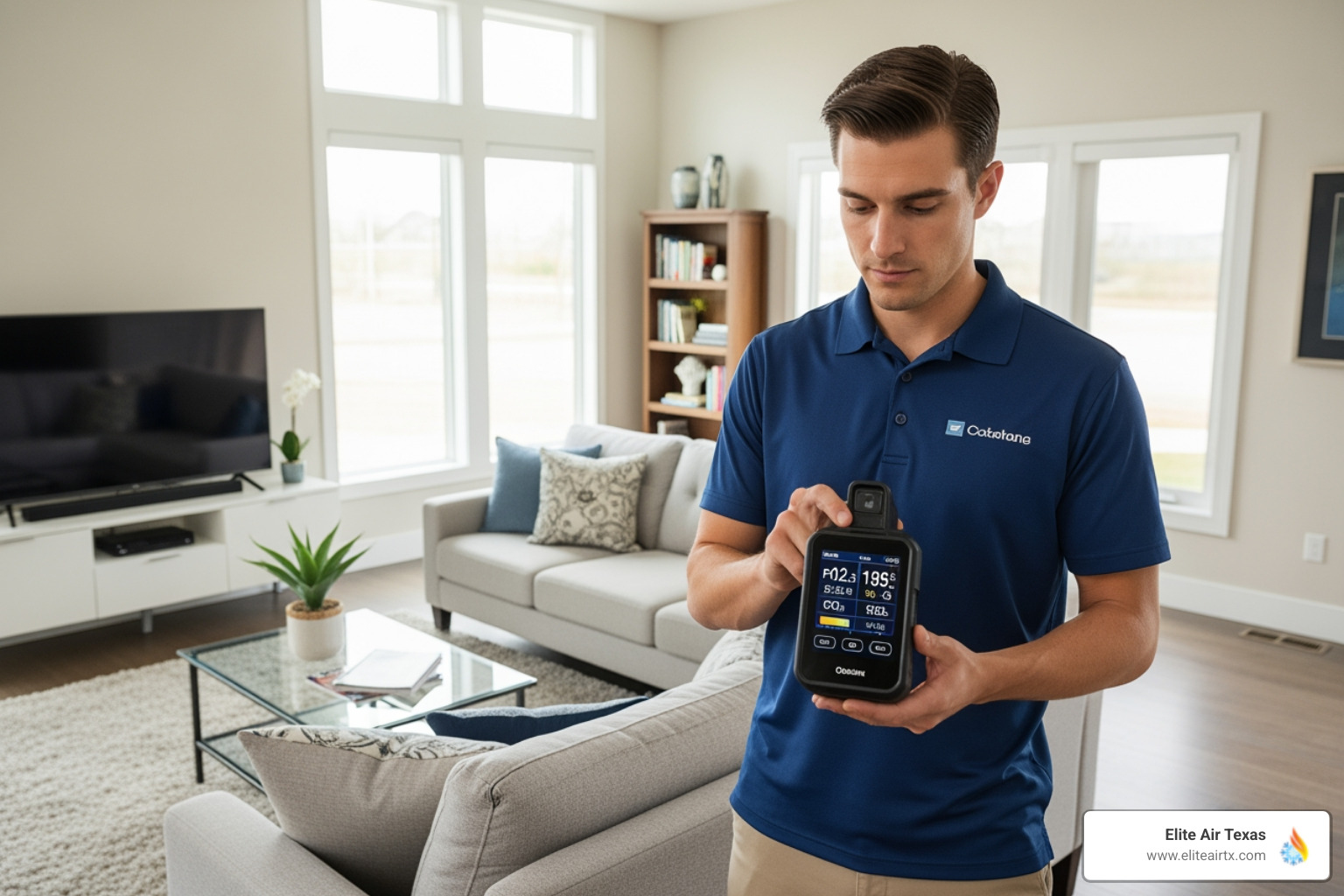
Consider testing if you experience unexplained symptoms that improve when you leave the house, such as headaches, fatigue, or allergy flare-ups. An assessment is also valuable after major renovations, when moving into a new home, or if you've had water damage and suspect mold. Any persistent, unusual odors are another clear sign to call for help.
A professional assessment is valuable because we use specialized equipment to identify and quantify specific pollutants like mold spores, VOCs, and allergens. We don't just guess—we measure. This allows us to pinpoint the source of the problem, whether it's a hidden leak, off-gassing materials, or an issue with your HVAC system.
With precise data, we can recommend customized solutions custom to your home's specific needs. An assessment removes the guesswork, giving you peace of mind and a clear path to a healthier home. It's an investment in both your family's health and your home's integrity.
Frequently Asked Questions About IAQ in Fort Worth
You've got questions about indoor air quality Fort Worth, and we've got answers. Here are some of the most common concerns we hear from homeowners.
How often should I change my HVAC filter in the Fort Worth climate?
The standard "every three months" advice rarely applies here. For optimal indoor air quality Fort Worth, check your filter monthly. Plan to replace it every 60-90 days as a baseline. However, if you have pets or allergy sufferers, switch to a monthly change, especially during our heavy pollen seasons. If you can't see light through the filter, it's time for a new one.
Are whole-home air purifiers more effective than portable units?
Yes, for comprehensive improvement. Whole-home purifiers integrate directly with your HVAC system, cleaning the air in every single room simultaneously. They use your existing ductwork to distribute purified air efficiently. Portable units are only effective in the single room they occupy, leaving the rest of your home's air untreated. A whole-home system is a more powerful and efficient solution for the entire house, a key part of the strategy recommended in the EPA's Care for Your Air: A Guide to Indoor Air Quality | US EPA .
What are the biggest indoor air quality concerns unique to North Texas?
Fort Worth faces a unique mix of challenges:
- High Humidity and Mold: Our sweltering summers create the perfect breeding ground for mold and mildew, which thrive in damp conditions.
- Aggressive Pollen Seasons: We experience year-round allergens, from cedar fever in winter to ragweed and grass pollens in spring and fall, which easily infiltrate homes.
- High Outdoor Ozone: As part of a metro area that struggles with ozone non-attainment, our homes are susceptible to infiltration from this lung irritant, which is created by vehicle and industrial emissions.
- Barnett Shale Activity: Proximity to natural gas wells adds another layer of industrial emissions to our outdoor air, which inevitably impacts indoor air.
Conclusion: Take Control of Your Home's Air
Your home should be a safe haven, but indoor air quality Fort Worth faces real challenges from outdoor ozone, aggressive pollen, and hidden indoor pollutants.
The good news is that you are not powerless. You now understand the culprits and, more importantly, what to do about them. Simple habits like regular HVAC maintenance and filter changes are your frontline defense. When you're ready for more, advanced solutions like whole-home air purifiers, UV lights, and dehumidifiers can transform your home's air from tolerable to truly healthy. If you're unsure where to start, a professional assessment provides clarity and customized solutions.
We at Elite Air Texas have spent years helping Fort Worth families breathe easier. We understand our region's unique challenges, from cedar fever to summer humidity. Our commitment to affordable comfort and elite service—backed by our 10-year labor warranty—means you don't have to compromise on your family's health.
Your family deserves to breathe clean, healthy air. Take the first step toward healthier air in your home today, and let's work together to make your sanctuary truly safe.

Ready to Enhance Your Comfort?
Contact our experts today to discover tailored HVAC solutions that fit your needs perfectly.

