%201.svg)


Your Guide to Cleaner Air: Indoor Air Quality Solutions in Dallas
December 2, 2025

Why Indoor Air Quality in Dallas Demands Your Attention
The indoor air quality Dallas residents experience is uniquely challenging. While the Dallas-Fort Worth metroplex is known for rapid growth and a booming industrial sector, this progress comes with a downside. The American Lung Association ranks DFW as one of the nation's worst cities for ozone pollution. This outdoor pollution doesn't stay outside; it seeps into our homes through ventilation, cracks, and open doors. Once inside, these pollutants concentrate and mix with indoor sources like cleaning products and mold. The EPA estimates that indoor air can be up to 70% more polluted than outdoor air. Since most people spend about 90% of their time indoors, the air inside your Dallas home matters more than ever.
Quick Answer: Key Indoor Air Quality Issues in Dallas
- Outdoor pollutants entering your home: High ozone days (Dallas-Fort Worth ranked 18th out of 227 metro areas in 2023) and particulate matter from industrial growth
- Indoor pollution sources: Volatile Organic Compounds (VOCs) from building materials and cleaning products, mold from Texas humidity, dust, pet dander, and combustion pollutants
- Health symptoms: Allergies, asthma, headaches, fatigue, eye and throat irritation, and long-term respiratory issues
- Solutions: Air quality monitoring, HEPA and activated carbon filtration, upgraded HVAC filters (MERV 13+), professional testing, natural purifiers, and proper ventilation
For comprehensive HVAC solutions that improve your home's air quality, learn more about our Dallas HVAC services, or schedule a professional indoor air quality assessment today.

Terms related to Indoor air quality Dallas:
Understanding the Unique Challenges to Indoor Air Quality in Dallas

Living in Dallas means enjoying a thriving community, but our region's expansion presents environmental challenges that affect your home's air. The Dallas-Fort Worth industrial market continues to grow, contributing to air pollution that infiltrates our homes. Our city's air contains a mix of pollutants from vehicle emissions and industrial facilities, including nitrogen oxides, sulfur dioxide, and particulate matter—microscopic particles that float invisibly and find their way indoors.
The Impact of Dallas's Outdoor Air on Your Home
When outdoor air quality is poor, your indoor air suffers. Dallas-Fort Worth has a serious issue with ozone pollution, ranking 18th out of 227 metro areas for high ozone days in a 2023 report by the American Lung Association. These conditions trap pollutants near the ground, triggering respiratory problems. Particulate matter is another threat, as these tiny particles can penetrate deep into your lungs and impair lung function. Pollution exposure is not evenly distributed; studies show some residents in neighborhoods like Joppa are exposed to two to three times more air pollution than the metro average. Even outdoor asbestos levels are higher in urban areas, and these fibers can enter your home. Proactive indoor air quality Dallas improvements are essential.
Common Sources Impacting Indoor Air Quality in Dallas
Your home's air is also affected by indoor sources. Volatile Organic Compounds (VOCs) are gases released from everyday items, and their concentrations can be up to ten times higher indoors. Sources include:
- New carpets and furniture, which can off-gas formaldehyde for months.
- Cleaning supplies, air fresheners, and pesticides, which release VOCs with each use.
- Building materials like particleboard, which can emit formaldehyde for years.
Our Texas climate also contributes to mold and mildew growth due to high humidity. Mold releases spores that can trigger allergies. Other common indoor pollutants include dust and pet dander, and combustion pollutants from gas stoves and fireplaces, which release carbon monoxide and other harmful particles.
Health Symptoms of Contaminated Indoor Air
Poor indoor air quality can cause symptoms that range from annoying to debilitating. Since we spend so much time indoors, these issues can become chronic. Be aware of:
- Increased allergies: Sneezing, runny nose, and itchy eyes that are worse at home.
- Worsening asthma: More frequent attacks or symptoms.
- Persistent headaches and fatigue: Difficulty concentrating despite adequate rest.
- Dizziness and lightheadedness.
- Eye, nose, and throat irritation: Burning eyes, dry throat, or a persistent cough.
- Long-term respiratory issues: Chronic bronchitis and impaired lung function from prolonged exposure.
If these symptoms improve when you're away from home, your indoor air quality is a likely culprit. Understanding this connection is the first step to a healthier home. For more information, check out our Dallas AC Repair Guide.
A Proactive Approach: Monitoring and Purifying Your Indoor Air
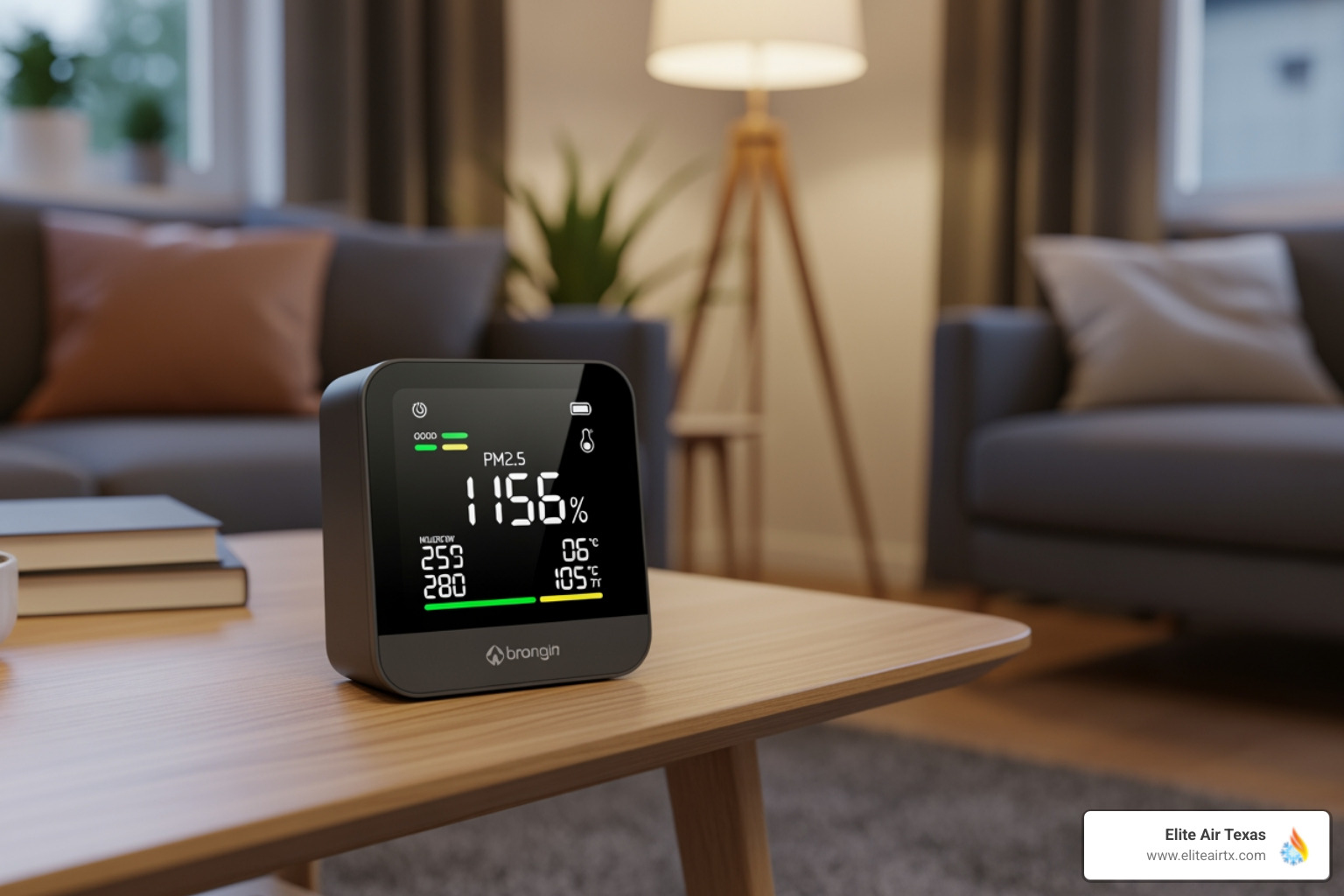
Taking control of your indoor air quality Dallas home starts with understanding what's in your air. Modern tools make it easier than ever to monitor and purify your home environment.
How to Monitor Your Air Quality at Home
Modern smart monitors provide real-time data on key pollutants like PM2.5 (particulate matter), VOCs (chemical vapors), carbon dioxide, and formaldehyde. Seeing these numbers allows you to make smarter choices about ventilation and product use. One pollutant deserving special attention in Dallas is radon, a radioactive gas that seeps from the ground. Dallas and Denton Counties have liftd radon levels, making testing essential for your family's long-term health.
Choosing the Best Air Purification Solutions
Once you know what's in your air, you can choose the right purification technology. HEPA filters are the standard for particulate removal, capturing 99.97% of particles like dust, pollen, dander, and mold spores. They are essential for anyone with allergies or asthma. When buying a portable unit, match the Clean Air Delivery Rate (CADR) to your room size for effective cleaning.
However, HEPA filters can't remove gases, odors, or chemical fumes. For that, you need activated carbon filters. These filters use porous carbon to adsorb VOCs and odors from renovation, cooking, or cleaning products. The most effective purifiers combine both technologies.
| Feature | HEPA Filters | Activated Carbon Filters |
|---|---|---|
| Primary Target | Particulates (dust, pollen, dander, mold spores) | Gases, odors, VOCs, chemical fumes |
| Mechanism | Traps particles on a dense fibrous mat | Adsorbs gas molecules onto a porous carbon surface |
| Effectiveness | High for particles | High for gases and odors |
| Best Used For | Allergies, asthma, general particle removal | Smoke, cooking odors, new paint smells, chemical sensitivities |
The Critical Role of Your HVAC System
Your HVAC system can be a powerful whole-home air purifier. Most standard filters only protect the equipment, but upgrading to a filter with a MERV rating of 13 or higher allows your system to capture tiny, harmful particles like bacteria and viruses. Remember to change these filters regularly to maintain airflow and efficiency, as outlined in our Dallas HVAC Maintenance guide.
Sealing your ductwork is another key step. Leaky ducts pull in unfiltered, dusty air from attics and crawl spaces. Sealing them ensures all circulated air passes through your filter. Also, keep your AC coils clean. Dirty, damp coils can breed mold and bacteria. Regular Dallas AC Coil Cleaning prevents these contaminants from spreading. For targeted filtration, Dallas Ductless AC Systems offer advanced options for specific rooms.
Professional Testing for Indoor Air Quality in Dallas
If DIY solutions don't resolve persistent health symptoms, musty odors, or you suspect hidden issues like mold or asbestos, it's time for professional indoor air quality Dallas testing. Experts use specialized equipment to pinpoint the exact type and concentration of pollutants that consumer devices miss. This allows for a targeted improvement plan based on data, not guesswork. Our team at Elite Air of Texas can analyze test results and create a practical roadmap to make your home a healthy sanctuary. Learn more about our Dallas HVAC Services and how we can transform your indoor air.
Natural and Everyday Habits for Better Air

Simple, natural approaches and consistent habits can significantly improve your indoor air quality Dallas home. These methods work alongside filtration systems to create a healthier environment.
Using Natural Air Purifiers
Certain houseplants are remarkably effective, and research shows they can detoxify the air you breathe by absorbing common pollutants.
- The Snake Plant is a low-maintenance choice that filters formaldehyde and xylene. It also releases oxygen at night, making it ideal for bedrooms.
- English Ivy is excellent at filtering airborne toxins like benzene and trichloroethylene from cleaning products and building materials.
- The Peace Lily tackles a wide range of pollutants, including ammonia and formaldehyde. It is mildly toxic if ingested, so keep it away from pets and small children.
While beneficial, houseplants should supplement, not replace, mechanical filtration and ventilation.
The Importance of Regular Cleaning and Ventilation
A consistent cleaning routine is a powerful tool for better air.
- Regular dusting and vacuuming are crucial. Use a damp cloth for dusting to trap particles, and a vacuum with a HEPA filter to capture tiny allergens instead of recirculating them.
- Bringing in fresh air through proper ventilation dilutes indoor pollutants. Open windows on days with good outdoor air quality, especially after cooking or cleaning.
- Use exhaust fans in the kitchen and bathroom. Run them during and after cooking or showering to remove pollutants and excess humidity that can lead to mold.
- Avoid synthetic air fresheners, as many release harmful chemicals. Address odors at their source or use natural alternatives like essential oil diffusers.
- Clean your dryer vent. A clogged vent can push humid, lint-filled air back into your home. Regular Dallas Dryer Vent Cleaning is important for safety and air quality.
These habits form a strong foundation for healthier indoor air when combined with other purification strategies.
Beyond Your Home: Community Action and Advocacy
Improving indoor air quality Dallas extends beyond our homes to the outdoor air we all share. Cleaner outdoor air means cleaner indoor air. By working together, our community can make a real difference.
Dallas Community Initiatives and Resources
Several local resources are available for those who want to get involved:
- Air North Texas offers educational resources for residents and schools to promote air-friendly choices.
- The Dallas Community Air Management Program provides local air quality data and develops solutions for our area's unique challenges.
- Clean Air Action Day, held in June, is a community event focused on pollution reduction and practical tips for cleaner living.
How You Can Advocate for Cleaner Air
Individual actions, when multiplied across the community, have a significant impact.
- Reduce vehicle emissions by carpooling, using DART, biking, or walking. Combining errands also helps cut down on driving.
- Conserve energy at home to reduce demand on power plants. Switch to LED bulbs, use energy-efficient appliances, and be mindful of your thermostat.
- Use your voice. Contact the Dallas Office of Environmental Quality & Sustainability or your city council member and state senator to advocate for policies that promote cleaner air.
Combining efforts to improve the air inside our homes with collective action to clean up our outdoor environment creates a healthier Dallas for everyone.
Conclusion: Take Control of Your Home's Air Quality
The indoor air quality Dallas families experience is a challenge, but it's one you can manage. Understanding the risks from both outdoor pollution and indoor sources is the first step to creating a healthier home.
Your home should be a sanctuary. By monitoring your air, using effective purification, maintaining your HVAC system, and adopting simple habits like proper ventilation, you invest in your family's health and well-being. Every small step, from adding a plant to upgrading an HVAC filter, contributes to cleaner air.
Your HVAC system is a powerful ally. With the right filters and regular maintenance, it actively protects your health. For care that addresses both comfort and air quality, explore our Dallas HVAC Maintenance services.
At Elite Air of Texas, we help Dallas homeowners breathe easier. We understand the local challenges and are committed to your family's comfort and health. Whether you need an air quality assessment, a filtration upgrade, or expert advice, our team is here to help.
Don't wait for poor air quality to impact your family. Take control today. To learn more or schedule an appointment for Dallas Air Conditioning Repair and air quality solutions, contact us.

Ready to Enhance Your Comfort?
Contact our experts today to discover tailored HVAC solutions that fit your needs perfectly.

