


Emergency HVAC Repair Fort Worth: North Texas Weather Impact
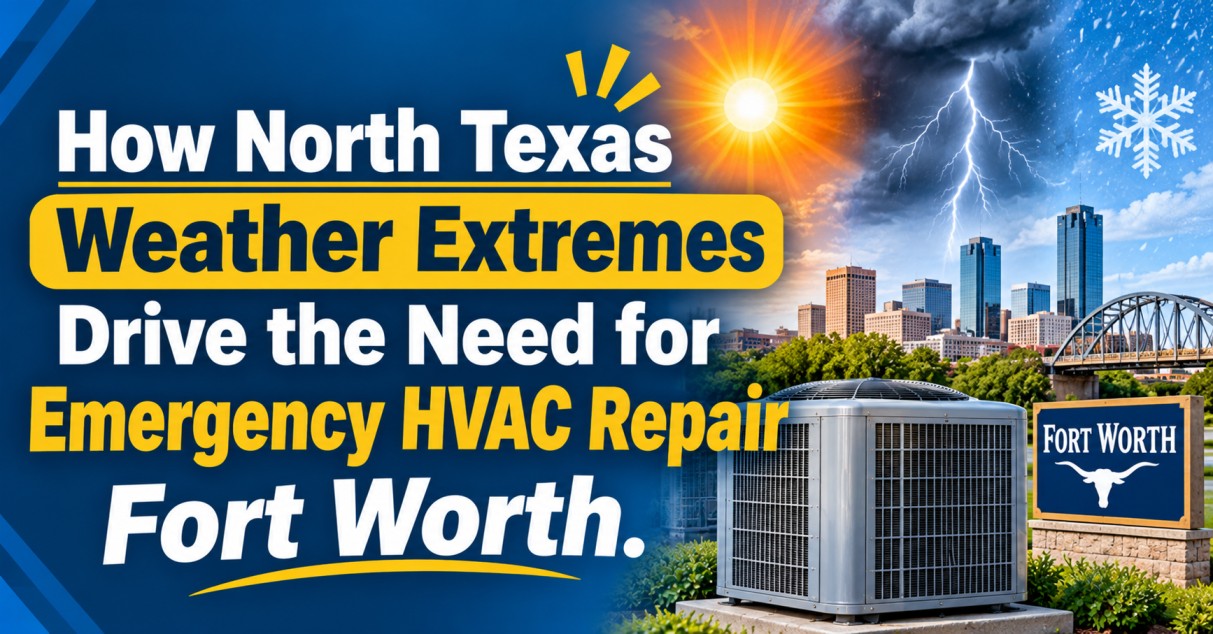
Anyone who has lived in Fort Worth understands the weather here rarely does things midway. Summer afternoons push well past 100 degrees, while a single winter storm can drop temperatures below freezing within hours. Your heating and cooling units perform hard through all of it. When it crumbles at the worst moment, waiting for a comfortable meeting is not a choice. That is why emergency HVAC repair is a service every North Texas homeowner should know before a disruption.
How North Texas Weather Impacts HVAC Systems
The Fort Worth weather conditions are hard on tools. Long, warm summers keep air conditioners performing almost nonstop for months, which makes stable strain on compressors, fan engines and power lines. Dirt, flower dust and wind-blown dust block filters and coils more quickly than many homeowners anticipate, compelling the system to work harder for minimal cooling.
Winter gives a different type of tension. Unexpected cold snaps force furnaces and heat pumps to function after long periods of little use. Sharp swings between mild days and freezing nights also make elements to prolong and contract, which deteriorates electrical connections and moving elements as time goes on.
Common HVAC Emergencies During Extreme Temperatures
Extreme heat and cold usually expose flaws that went unseen during mild weather. In summer, general emergencies include pressure pump failures, frozen evaporator coils, refrigerant leaks and failed capacitors that make the outdoor unit silent. When the air conditioner performs but only blows heat air, a serious issue is generally occurring.
In winter, the most common emergencies include furnaces that will fail to ignite, broken heat exchangers, faulty igniters, and heat pumps trapped in defrost mode. Any gas smell, burning smell or strange noise from a heating unit should be handled as urgent.
Why Emergency HVAC Repair Is Essential for Homeowners
A broken system during a warm wave or freeze is an actual risk, not only an annoyance. Indoor temperatures can rise to unsafe levels rapidly, which is especially hazardous for newborns, grown ups and anyone with health issues. In freezing weather, losing heat can result in inconvenient living situations and even burst pipes.
On-time emergency HVAC repair also secures your comfort. A tiny problem like a leaking refrigeration pipe or a failing condenser can cause a complete system malfunction if left alone. Rapid action generally means an easier repair, lower costs and minimal inactive time.
Warning Signs Your HVAC System Needs Immediate Repair
Your system generally gives clues before it stops fully. Weak air circulation or rooms that will not reach the temperature you set are among the earliest indications and unusual sounds like grinding, banging or buzzing always call for attention. Burning smells or mouldy odor coming from the openings should never be neglected and neither should ice accumulation on the indoor or outdoor system.
Preparing Your HVAC System for Extreme Weather
While no one can expect every malfunction, preparation reduces the smells of an emergency. Plan maintenance before summer and winter, when professionals can sanitize coils, test electrical elements, verify refrigerant levels and check the burner and heat exchange unit. Replace air filters routinely, since a blocked filter is among the most common reasons of improper maintenance.
Maintain the area around your outside unit clear of leaves, lawn clippings, and storage items. A programmable or intelligent thermostat can decrease unwanted strain, and it is wise to keep your repair provider’s contact details somewhere easy to find.
Frequently Asked Questions:
When Should I Call for Emergency HVAC Repair?
Call immediately if your system stops performing during severe heat or cold, if you smell gas or scorching or if you see fumes or sparks.
What Causes Sudden HVAC System Breakdowns?
General causes cover worm components, dusty purifiers, electrical malfunctions, refrigerant leaks and overworked parts. Lack of routine upkeep and extreme weather make these issues more probably.
What Signs Indicate Urgent HVAC Problems?
Loud or strange sounds, warm air from the AC, no heat from the heating unit, consistent cycling, strange smells, and water seepage all point to immediate issues that should be addressed rapidly.
Can I Prevent Unexpected HVAC Emergencies?
Not every failure can be stopped but periodical maintenance, routine filter changes and on time attention to tiny problems greatly decrease the opportunities of an unexpected failure.
What Helps Technicians Diagnose HVAC Emergencies?
Techniciancs count on a comprehensive description of the signs, system age and upkeep history, heat readings and diagnostic equipments that test electrical elements, air circulation and refrigerant levels.

Ready to Enhance Your Comfort?
Contact our experts today to discover tailored HVAC solutions that fit your needs perfectly.

