%201.svg)


A Complete Guide to New HVAC Installation for Homes
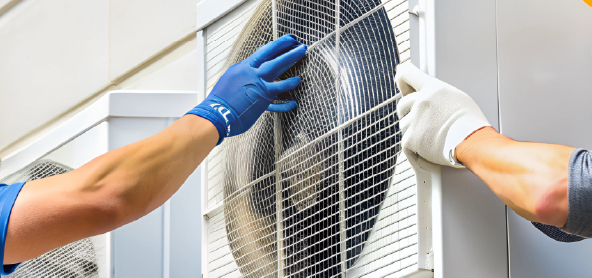
Installing a new HVAC system is a significant financial commitment for homeowners alike. A correctly chosen and installed system guarantees comfort throughout the whole year, energy savings, and better indoor air quality. If you are building a new property, updating an old system, or replacing a failing unit, comprehending the installation procedure can help you make smart decisions and prevent expensive errors. This detailed guide accompanies you with all the necessary information about new HVAC installation for residential spaces.
Understanding HVAC Systems and Their Importance
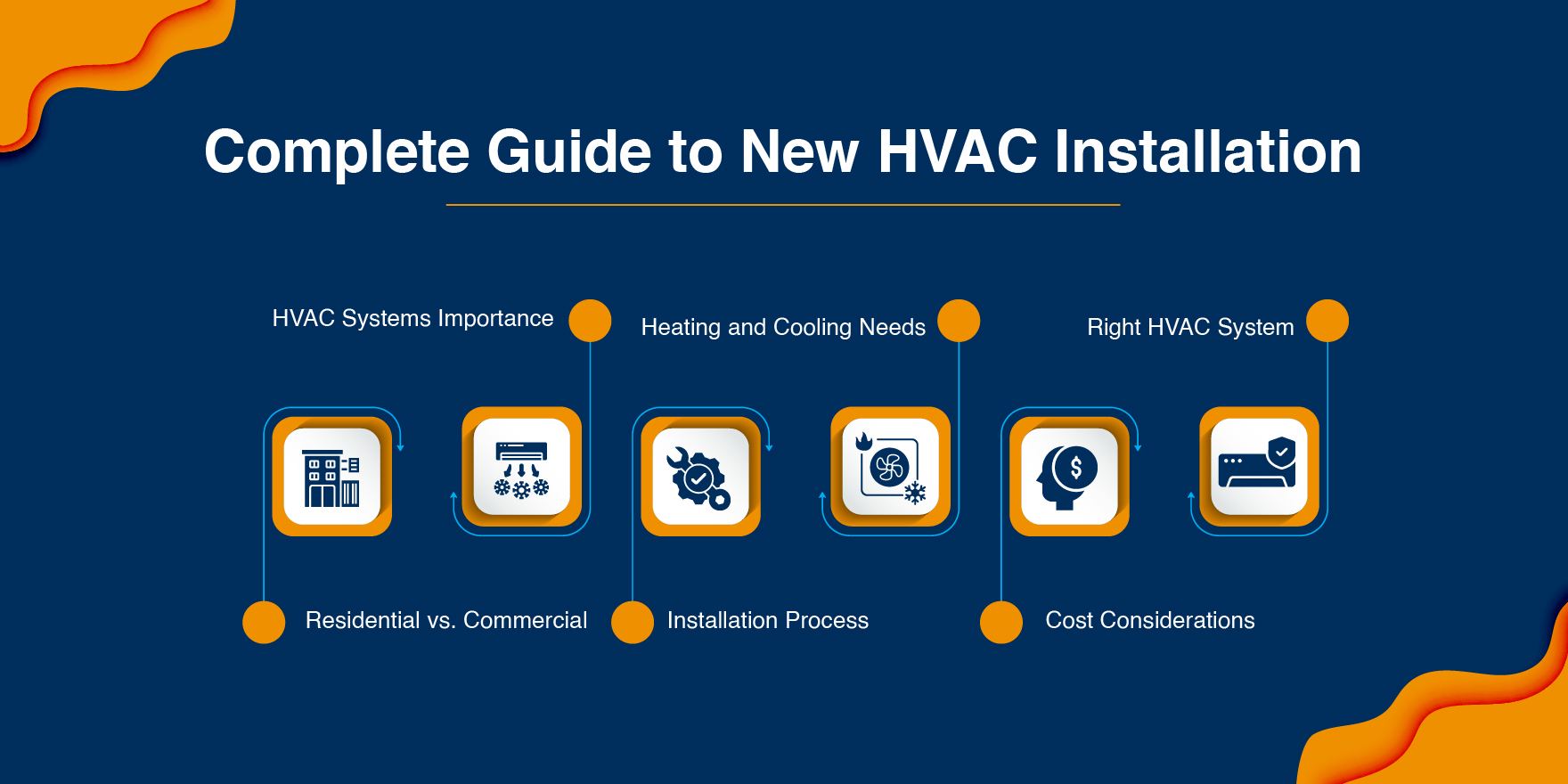
The HVAC system is responsible for controlling the temperature, humidity, and air circulation in a building. Its role is vital in providing comfort during the hottest or coldest days while also preventing the air quality issues that come with poor indoor air circulation. Today's HVAC systems come with higher efficiency ratings, possess a smaller carbon footprint, and offer advanced technological features. To the business, a perfect HVAC system translates into higher employee productivity and client satisfaction, while the homeowner enjoys the advantage of a constant ease of living and lower electricity costs.
Assessing Your Heating and Cooling Needs
Before the installation of a new HVAC system, it is necessary to determine the heating and cooling requirements specific to your case. The factors that affect the type and capacity of the system needed include property size, layout, insulation quality, local climate, and the number of people occupying the place. Houses might need smaller zoned systems, whereas commercial buildings require more complicated layouts to serve large areas. Professional load calculation guarantees the system to be of the perfect size, thus bringing about the maximum efficiency and performance.
Choosing the Right HVAC System
To choose an HVAC system, you will need to weigh your performance requirements, budget, and overall efficiency. To lower energy costs over time, you should consider the HVAC system's energy efficiency rating when selecting an HVAC system. Companies have to consider the scalability and zoning capabilities of their system, whereas homeowners may prefer a quieter system and a smart thermostat compatible with their home. Opting for a system that meets your current requirements as well as future requirements can provide you with long-term satisfaction.
Residential vs. Commercial HVAC Installation
While the installation fundamentals of HVAC systems are similar, residential HVAC systems are generally less complex and, therefore, quicker to install than commercial systems. Moreover, residential systems are designed primarily for comfort and energy savings. However, when commercial systems are installed, the equipment used will include larger components, automation, advanced controls, and customized ductwork to accommodate several different zones. Additionally, many companies must comply with various building codes and regulations; thus, the professional expertise of an HVAC contractor is necessary for successful HVAC installation.
The HVAC Installation Process Explained
The procedure of installing HVAC begins with the removal of the old machine, if it is the case, and the cleaning of the site. Afterwards, the new unit is installed; ductwork is done, or piping is connected; and thermostats and control systems are set up. Then, the system is sealed, calibrated, and tested properly to secure its peak performance. The use of a professional installer greatly reduces the chance of any leaks, inefficiencies, and breakdowns in the future. After the installation, the system has to be tested thoroughly to verify that it is up to standard in terms of performance and safety.
Energy Efficiency and Cost Considerations
One of the most significant issues to look at when a new HVAC system is being installed is energy efficiency. High-efficiency systems, even though they come with a higher initial cost, will over the years give back the expense in a substantial decrease in energy bills. To help with installation expenses, rebates, tax credits, and financing options may be available. For companies, the energy-efficient HVAC systems would mean lower operational costs and thus contribute to keeping a greener planet. Homeowners can celebrate their lower monthly bills and increased property value.
The Finale
Installing a new HVAC system is a major step that will have an impact on the comfort level, energy savings, and costs for the long term, not only for homes but also for businesses. Knowing what your heating and cooling needs are, selecting the right system, and cooperating with skilled workers will guarantee a hassle-free installation and dependable operation. It is not only the indoor comfort enhancement but also the lasting value and peace of mind that come with investing in a quality HVAC system and doing regular maintenance.

Ready to Enhance Your Comfort?
Contact our experts today to discover tailored HVAC solutions that fit your needs perfectly.

